HOME REMODELING FOR CAREGIVING
Planning Homes That Support Care, Accessibility, and Independence
Home remodeling for caregiving begins with understanding.
As a person’s health condition, mobility, functional abilities, caregiving needs, and equipment requirements change, the physical structure of the home may need to support very different levels of care.
A doorway that works today may become difficult to navigate later. A bathroom that supports someone who currently walks with assistance may not adequately accommodate future mobility needs. A bedroom may function well until equipment or greater caregiver assistance requires additional space.
This is why remodeling decisions should not be based only on what is happening today.
Before making significant changes to a home, it is important to understand the individual receiving care, the caregiver providing support, the physical structure of the home, current care needs, and how those needs may reasonably change over time.
Understand the care journey before changing the home.
Why This Guide Exists
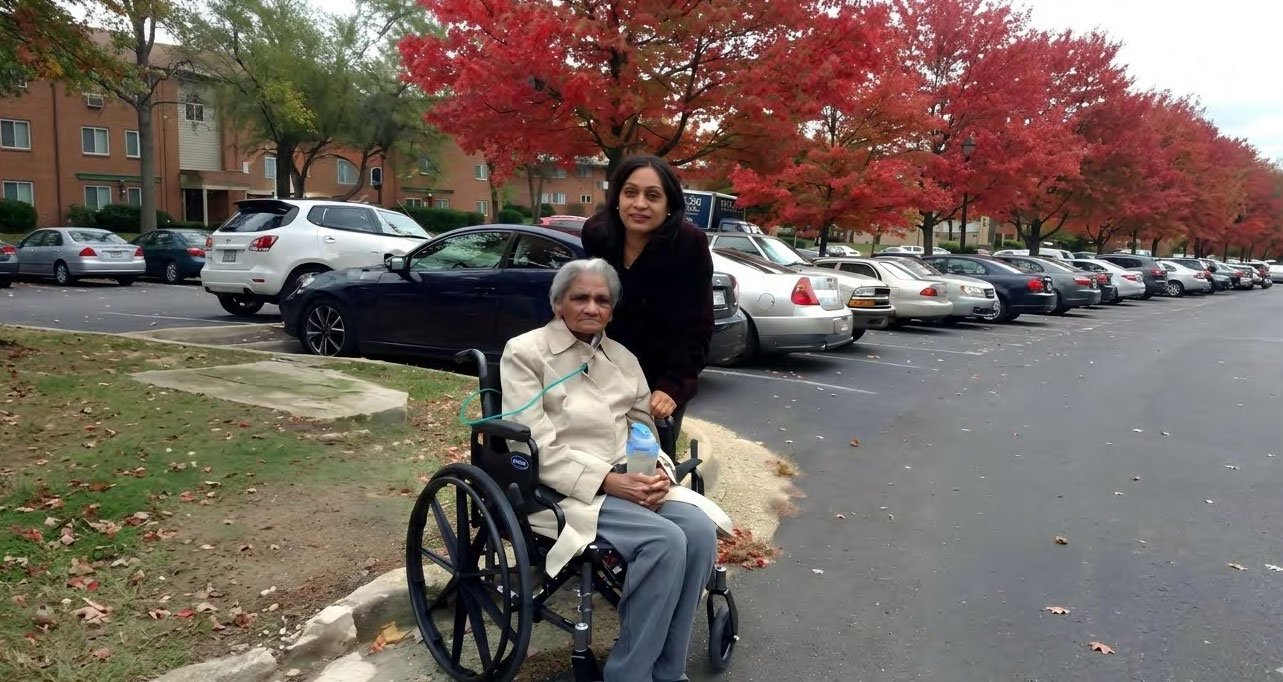
When my mother’s health changed, I began to notice something I had never paid much attention to before.
The structure of the home started to affect the way care was delivered.
We understood medication.
We understood monitoring.
We understood routines.
But we had not fully understood how the physical structure of the home would shape caregiving.
A doorway that once felt ordinary required adjustment.
Movement required repositioning.
A single step could interrupt what should have been a simple transition.
None of these details seemed significant on their own. But caregiving does not happen once. It happens repeatedly, every day.
And as my mother’s care needs changed, the relationship between her health, the care she required, the equipment involved, the caregiver’s responsibilities, and the home became increasingly clear.
What worked at one stage of care did not necessarily work at another.
That experience taught me something important:
The home cannot be considered separately from the person who needs care or the people providing that care.
That understanding became part of the foundation for Monse-Heart’s Home Remodeling for Caregiving education.
Why Home Remodeling for Caregiving Matters
Most homes are designed around independent living.
But health and functional needs can change.
A person who moves independently today may need assistance later. Someone currently using a walker may eventually require a wheelchair. Changes in strength, balance, endurance, cognition, or mobility may increase the amount of caregiver assistance required.
Equipment needs may change as well.
As these circumstances evolve, the home may need to support:
- Changing mobility
- Increased caregiver assistance
- Transfers and positioning
- Durable medical equipment
- Wider or clearer pathways
- Bathroom accessibility
- Bedroom accessibility
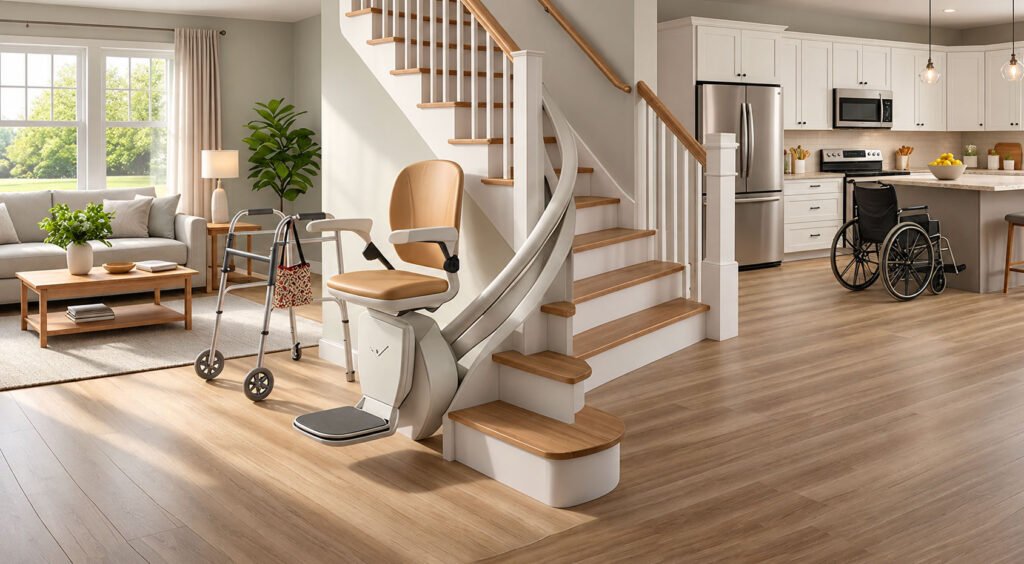
- Stairs and level changes
- Safer entrances and exits
- Greater space for caregiving activities
The important question is therefore not simply:
“What should we remodel?”
A better question is:
“What does this individual need from the home now, and how might those needs change as the care journey evolves?”
That is where informed remodeling begins.
Care Needs May Evolve Over Time
One of the most important realities of caregiving is that care needs are rarely static.
The changing course of a health condition may affect mobility, strength, balance, endurance, independence, cognition, equipment needs, and the amount of assistance required.
Some changes happen gradually.
Others may follow a hospitalization, injury, change in health status, or transition in care.
A person who currently requires minimal assistance may later require greater caregiver support.
A walker may eventually be replaced by a wheelchair.
Transfers may become more difficult.
Additional equipment may be introduced.
A bedroom or bathroom that functions well today may become harder to use later.
No family can predict every future circumstance.
But when changes in health, mobility, function, or caregiving needs can reasonably be anticipated, those possibilities should be considered before significant remodeling decisions are made.
Planning for caregiving means understanding today’s needs while maintaining an informed
view of how those needs may evolve.
The Physical Reality of Caregiving
Caregiving is emotional, but it is also physical.
Daily care may involve:
- Walking and mobility
- Positioning
- Transfers
- Lifting or assisting
- Navigating rooms and hallways
- Entering and leaving the home
- Bathroom activities
- Managing medical or mobility equipment
- Helping with activities of daily living
When the physical structure of the home does not adequately support these activities, both the individual and caregiver may have to continually compensate.
Furniture gets repositioned.
Movement patterns change.
Caregivers work around narrow spaces.
Equipment is placed wherever it can fit rather than where it functions best.
Tasks may take longer or require additional effort.
These challenges can become more significant as the person’s care needs increase.
A home that supports caregiving must be considered from the perspective of both the
person receiving care and the people providing that care.
Understanding Before Remodeling
When a home begins creating difficulties, the natural response may be to start making changes.
But the visible problem may only be one part of the situation.
Before remodeling, families may benefit from understanding:
- What is changing in the person's health or functional abilities?
- What assistance is required today?
- How might that level of assistance change?
- What difficulties is the caregiver experiencing?
- What equipment is currently being used?
- What equipment may reasonably become necessary?
- Where does movement become restricted?
- Are transfers becoming more difficult?
- Does the caregiver have adequate working space?
- How well does the home's current layout support care?
- Are current changes likely to remain appropriate if care needs increase?
These questions help families move beyond reacting to one immediate problem.
Education creates the opportunity to understand the broader care situation before
committing significant time, money, and resources to remodeling.
Better Understanding Can Help Reduce Repeated Remodeling
Home remodeling can require significant financial resources, time, planning, and disruption.
One of the risks of remodeling only around an immediate need is that the modification may no longer be adequate as the person’s health, mobility, equipment needs, or level of assistance changes.
A bathroom may be modified for someone who currently walks with assistance, only to require additional changes if wheelchair accessibility becomes necessary.
A doorway may accommodate a walker but not future mobility equipment.
A bedroom may accommodate a standard bed but provide insufficient space if a hospital bed, transfer equipment, or greater caregiver access becomes necessary.
A modification in one area may later create the need for another because equipment pathways or caregiver working space were not considered.
This is why understanding how care needs may evolve matters before major remodeling begins.
Families cannot prepare for every possibility, nor should they remodel unnecessarily for circumstances that may never occur.
But they can learn to ask better questions:
What does the person need now?
How might mobility and function reasonably change?
Could caregiver assistance increase?
What equipment may become necessary?
Will today’s modification continue to work if those needs change?
Considering these questions before construction may help reduce avoidable trial and error, repeated remodeling, unnecessary disruption, and inefficient use of financial resources.
Plan for today with an informed view of tomorro
More Than Looking at the House
A caregiving home cannot be fully understood by looking at the physical structure alone.
- The house is only one part of the picture.
- The person receiving care matters.
- The caregiver matters.
- Current abilities matter.
- Changing health and functional needs matter.
- Equipment matters.
- Daily routines matter.
- Financial considerations matter.
- And the way all of these factors may change over time matters.
This is why Monse-Heart’s educational approach begins with understanding the whole caregiving situation, rather than looking at remodeling as an isolated construction decision.
The question is not only whether a doorway can be widened or a bathroom can be modified. The question is whether the home can continue to support the individual’s care needs as those needs evolve.
The Monse-Heart Signature Educational Experience
Structured learning provides important knowledge.
But every individual, caregiver, and home is different.
That is why Monse-Heart extends education beyond general information through our Personalized Care & Preparedness Assessment.
Depending on the service selected, the assessment may be conducted virtually or through an in-home visit.
The assessment helps us better understand:
- The individual receiving care
- Current and anticipated care needs
- Mobility and functional considerations
- The caregiver's responsibilities and challenges
- Family and caregiver support
- The physical structure and accessibility of the home
- Current and potential equipment needs
- Home remodeling and accessibility considerations
- Financial and resource considerations
- Planning priorities and future considerations
These elements are considered together so the educational experience can reflect the participant’s actual circumstances rather than a generic caregiving scenario.
These elements are considered together so the educational experience can reflect the participant’s
actual circumstances rather than a generic caregiving scenario.
From Assessment to Personalized
Educational Guidance
The assessment is not the end of the educational experience.
What we learn through the assessment helps us develop a clearer picture of how the individual’s care needs, caregiver responsibilities, equipment considerations, and physical home relate to one another.
Those findings become the foundation for personalized educational guidance.
Through a Guidance Zoom Call, participants have an opportunity to review relevant findings, strengthen their understanding, organize important questions, and consider what may require further evaluation by qualified professionals.
This creates an educational experience shaped around:
- The real individual.
- The real caregiver.
- The real home.
- The real care situation.
And importantly:
- How that care situation may change over time.
Monse-Heart does not replace the healthcare, remodeling, accessibility, architectural, engineering, financial, insurance, or other qualified professionals who may ultimately be involved.
We help individuals and families become better informed and better prepared to work with those professionals.
How the Home Fits Into the Care Journey
At first, the home may seem secondary to the medical or caregiving situation.
But as care needs change, the role of the home often becomes more visible.
Movement may require more space.
Positioning may become more complex.
Equipment may introduce new demands.
Caregivers may require better access around beds, chairs, bathrooms, or mobility equipment.
When the home supports care:
- Movement may become easier
- Daily routines may become more manageable
- Equipment may be easier to accommodate
- Caregivers may have better working space
- Accessibility may improve
- The home may remain functional longer as circumstances change
When the home does not support care:
- Daily tasks may require more effort
- Equipment may be difficult to position or use
- Accessibility challenges may become more noticeable
- Caregivers may continually compensate for structural limitations
- Additional modifications may become necessary
The suitability of a home for caregiving depends not only on how it functions today, but also on how well it
may support changing care needs over time.
When Equipment and the Home Must
Work Together
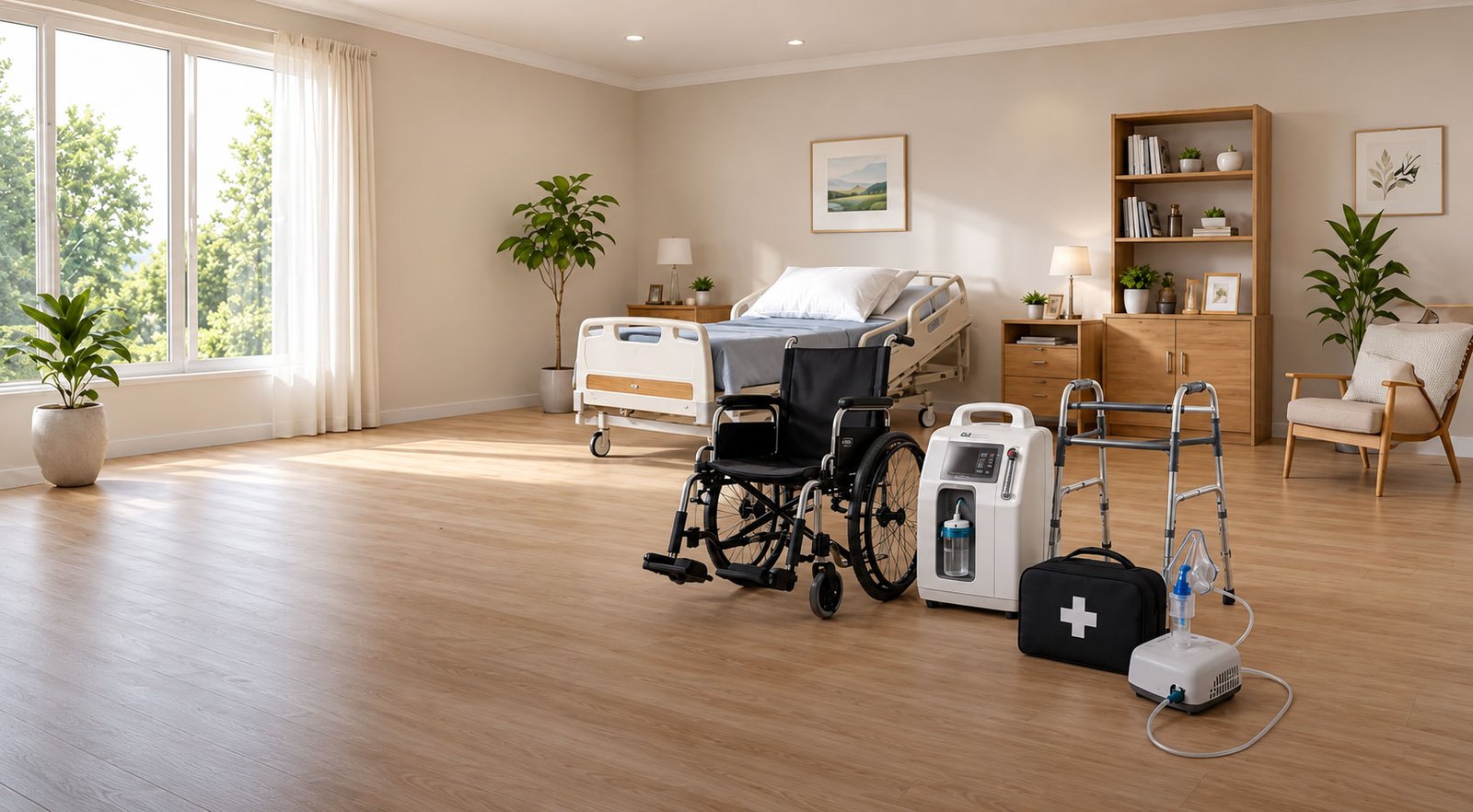
Durable medical equipment and the physical structure of the home are closely connected.
A wheelchair requires appropriate pathways, doorway clearance, and maneuvering space.
A hospital bed requires adequate room for placement and caregiver access.
Transfer equipment may require additional clearance.
Mobility aids may function differently depending on flooring, thresholds, stairs, and room layout.
Bathroom equipment may require appropriate positioning and accessibility.
Equipment needs may also change as the person’s health and functional abilities change.
Understanding equipment without considering the home leaves an important part of the picture incomplete.
Likewise, remodeling a home without considering current and reasonably anticipated equipment needs may result in additional modifications later.
Equipment needs and home remodeling should be understood within the same evolving care journey.
Financial and Resource Considerations
Home remodeling decisions may involve significant financial commitments.
Depending on the situation, families may need to consider:
- Remodeling costs
- Accessibility-related modifications
- Equipment needs
- Temporary versus longer-term solutions
- Financial resources
- Insurance-related questions
- Possible assistance programs
- The cost of repeated modifications
- Long-term living arrangements
A remodeling decision that works only for a short period may have different financial implications than one considered with changing care needs in mind.
This does not mean families should automatically make larger or more expensive modifications.
It means they should understand the broader situation before committing resources.
Thoughtful education before remodeling may help families use their time and financial resources more effectively
and reduce unnecessary repeated modifications whenever possible.
Temporary Changes, Permanent Remodeling, or a Different Living Arrangement?
Not every caregiving situation requires major remodeling.
Depending on the individual and the anticipated direction of care needs, families may consider:
- Temporary solutions
- Modular accessibility changes
- Permanent modifications
- Larger structural remodeling
- Changes in how rooms are used
- A different living arrangement
Important considerations may include:
- Current functional abilities
- How those abilities may change
- Expected duration of the care need
- Equipment requirements
- Caregiver responsibilities
- Structural limitations of the home
- Financial considerations
- Whether the home can reasonably support anticipated care needs
Sometimes education may help a family recognize that remodeling is appropriate.
At other times, it may help them recognize that extensive remodeling may not provide the best long-term solution.
The purpose is not to assume that every home must be remodeled. It is to understand the situation well enough to make a more informed decision about what comes next.
Home Remodeling Within the Monse-Heart Educational Ecosystem
Home Remodeling is one of the five connected pillars of the Monse-Heart Educational Ecosystem:


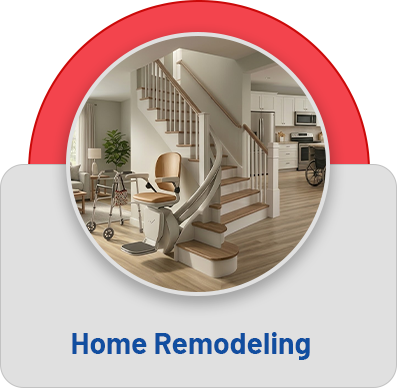

Each pillar addresses a different area of learning while contributing to one connected educational experience that supports participants throughout every stage of the care journey.
Home Remodeling connects particularly closely with caregiving responsibilities, durable medical equipment, financial considerations, accessibility, and changing care needs.
A change in health may affect mobility.
A change in mobility may introduce equipment.
Equipment may reveal limitations within the home.
Home modifications may create financial considerations.
And as circumstances continue to change, participants may need to revisit what they previously learned.
Life’s important care decisions rarely happen in isolation.
A Practical Reflection Before Remodeling
Before making significant changes to a home, consider:
- What has changed in the person's health or functional abilities?
- What care is required today?
- How might those needs reasonably change?
- Which daily activities are becoming more difficult?
- Where does the caregiver experience the greatest challenge?
- What mobility or accessibility issues are present?
- What equipment is currently being used?
- Could equipment needs change?
- Which parts of the home create barriers?
- Does the caregiver have adequate working space?
- Are we solving only today's problem?
- Would the proposed modification still function if care needs increase?
- Could one modification create the need for another?
- Are we considering both the person receiving care and the caregiver?
- What questions should we prepare before speaking with qualified professionals?
Start with understanding, not immediate construction.
Understand the Care Journey Before
Changing the Home
When health and caregiving needs change, the home does not
automatically change with them.
Families may find themselves adjusting routines, repositioning furniture, working around equipment, navigating inaccessible spaces, or considering costly modifications.
But the first question should not simply be:
Depending on the individual and the anticipated direction of care needs, families may consider:
“What should we remodel?”
It should be:
“What does this individual need from the home now, and how might those needs change over time?”
That requires understanding the person receiving care.
The caregiver providing support.
The physical structure of the home.
Current mobility and functional abilities.
Equipment needs.
Financial considerations.
And the anticipated direction of the care journey.
That is why Monse-Heart approaches Home Remodeling through education first, supported by personalized assessment and educational guidance.
By helping individuals and families understand the bigger picture before major changes are made, we aim to strengthen their ability to ask better questions, work more effectively with qualified professionals, and use their time and resources more thoughtfully.
Because the goal is not simply to remodel a home for today’s needs.
The goal is to understand how the home can continue to support care, accessibility, independence, and changing needs over time.
A Personal Note from the Founder
Mussarat Asad, BScN, MPH
Founder and Director
Monse-Heart Education
A home is more than a physical structure. It is where daily routines unfold, relationships are nurtured, and care is provided. When health, mobility, or caregiving needs change, a home that once functioned well may no longer support everyone living and providing care within it.

I believe families deserve the opportunity to understand these changing needs before committing significant time, money, and resources to remodeling. Thoughtful preparation can help them ask better questions, consider both present and anticipated needs, and work more confidently with qualified professionals.
To me, remodeling for caregiving is not about making a home feel like a facility or changing everything at once. It is about helping the home continue to feel like home while supporting safety, accessibility, dignity, independence, and the people providing care.
My hope is that this pillar helps individuals and families understand what their home may need so they can approach future decisions with greater clarity and preparedness.
Educational Disclaimer
The Monse-Heart Home Remodeling Learning Pathway and related educational services are provided for educational purposes only.
Monse-Heart Education does not perform home remodeling, construction, architectural, engineering, contracting, or home inspection services and does not provide legal, financial, insurance, medical, or other licensed professional services.
Our role is to provide structured education, personalized assessment, and educational guidance that helps individuals and families better understand home remodeling and accessibility considerations related to health conditions, caregiving circumstances, and current and anticipated care needs.
Participants should consult qualified remodeling professionals and other appropriate licensed professionals before making structural modifications, construction-related decisions, or other professional decisions.
Frequently Asked Questions About Home Remodeling for Caregiving
1. How much does it cost to remodel a home for caregiving?
Costs vary considerably depending on the structure of the home, accessibility needs, modifications being considered, and the scope of work.
Before focusing only on cost, it can be helpful to understand what care needs the modification is intended to support and how those needs may reasonably change.
A clearer understanding before remodeling may help families use resources more thoughtfully and reduce avoidable repeated modifications.
2. When should families begin thinking about home modifications?
Families often begin considering remodeling after a challenge becomes difficult to manage.
However, education can begin earlier.
Understanding how a person’s health, mobility, equipment, and caregiving needs may evolve allows families to recognize potential home-related issues before they become urgent.
Planning ahead does not necessarily mean remodeling immediately.
It means understanding what may need attention as circumstances change.
3. Should remodeling address current needs or anticipated future needs?
Both deserve consideration.
Current needs must be understood first, but focusing only on today’s situation may overlook how mobility, function, equipment requirements, or caregiver responsibilities could change.
No one can predict every future circumstance.
The goal is to understand the likely direction of care needs well enough to make more thoughtful decisions about the home.
4. Why do some families remodel more than once?
Sometimes repeated remodeling is unavoidable because circumstances change unexpectedly.
However, additional modifications may also occur when initial changes address only an immediate problem without considering other connected factors such as changing mobility, equipment, accessibility, caregiver working space, or anticipated care needs.
Education before remodeling can help families consider a broader range of factors before committing significant resources.
5. How do families know what home changes may be necessary?
Begin by understanding what is happening during daily care.
Consider:
- Where does movement feel restricted?
- Which activities require additional effort?
- Where does the caregiver struggle to provide assistance?
- Is equipment difficult to position or use?
- Which spaces feel unsafe or inaccessible?
- What has changed in the person’s health or abilities?
- What changes may reasonably occur in the future?
These observations can help families prepare more informed questions for qualified professionals.
6. Why does Monse-Heart assess more than the house?
Because the physical home is only one part of the caregiving situation.
A meaningful educational assessment should also consider the person receiving care, caregiver responsibilities, mobility and functional needs, equipment, family support, current care needs, and how those needs may change.
Looking at these factors together provides a broader educational understanding of what the home may need to support.
7. What is Monse-Heart’s role in home remodeling decisions?
Monse-Heart provides structured education, assessment, and personalized guidance to help families better understand their caregiving and home accessibility needs before making remodeling decisions. We help families become better prepared to work with qualified remodeling and other appropriate professionals.
8. How does home remodeling connect with durable medical equipment?
Equipment such as wheelchairs, hospital beds, and transfer devices may require additional space, accessibility, or caregiver access within the home. Considering current and anticipated equipment needs before remodeling can help families plan more effectively and may reduce the need for repeated modifications later.
9. How does home remodeling connect with financial considerations?
Home modifications can involve significant expense.
Understanding current and anticipated care needs before making major structural changes may help families make more thoughtful decisions about how financial resources are used.
Families may also have questions about insurance, assistance programs, benefits, or other resources that should be discussed with appropriate qualified professionals.
10. When should a family consider relocation instead of remodeling?
Some homes may have structural limitations that make extensive modification difficult, impractical, or financially burdensome.
A family may need to compare remodeling with other living arrangements based on accessibility, anticipated care needs, caregiver requirements, long-term plans, available resources, and the individual’s circumstances.
The purpose of education is to help families understand these considerations before making major decisions.