
Durable Medical Equipment
Preparing for Changing Care Needs
Care needs often evolve over time, and the equipment that supports those needs may change as well.
The Durable Medical Equipment learning pathway provides structured education that helps individuals and families better understand equipment options, recognize changing care needs, and prepare thoughtfully for decisions that support safer, more effective home-based care.
Rather than focusing on equipment alone, this learning experience explores how equipment, the home environment, and caregiving responsibilities work together to support greater independence, safety, and long-term preparedness.
Why Equipment Education Matters
When equipment becomes part of daily life, the decisions surrounding it often affect much more than mobility or medical care.
They can influence safety, independence, caregiver responsibilities, home accessibility, and overall quality of life.
Many individuals and families receive equipment during times of illness, recovery, or changing health circumstances without fully understanding the available options or how those choices fit within their everyday lives.
Structured education helps participants build awareness before important decisions arise, allowing them to ask better questions, understand their options, and prepare for changing care needs with greater clarity.
Our Approach
Education Before Equipment Decisions
At Monse-Heart Education, we believe equipment decisions should begin with understanding—not uncertainty.
Our role is to provide structured educational guidance that helps participants explore how equipment supports caregiving, home safety, accessibility, and daily living. Rather than recommending specific products or providing clinical advice, we focus on helping individuals and families understand the broader factors that influence equipment decisions.
Because informed equipment decisions begin with informed understanding.
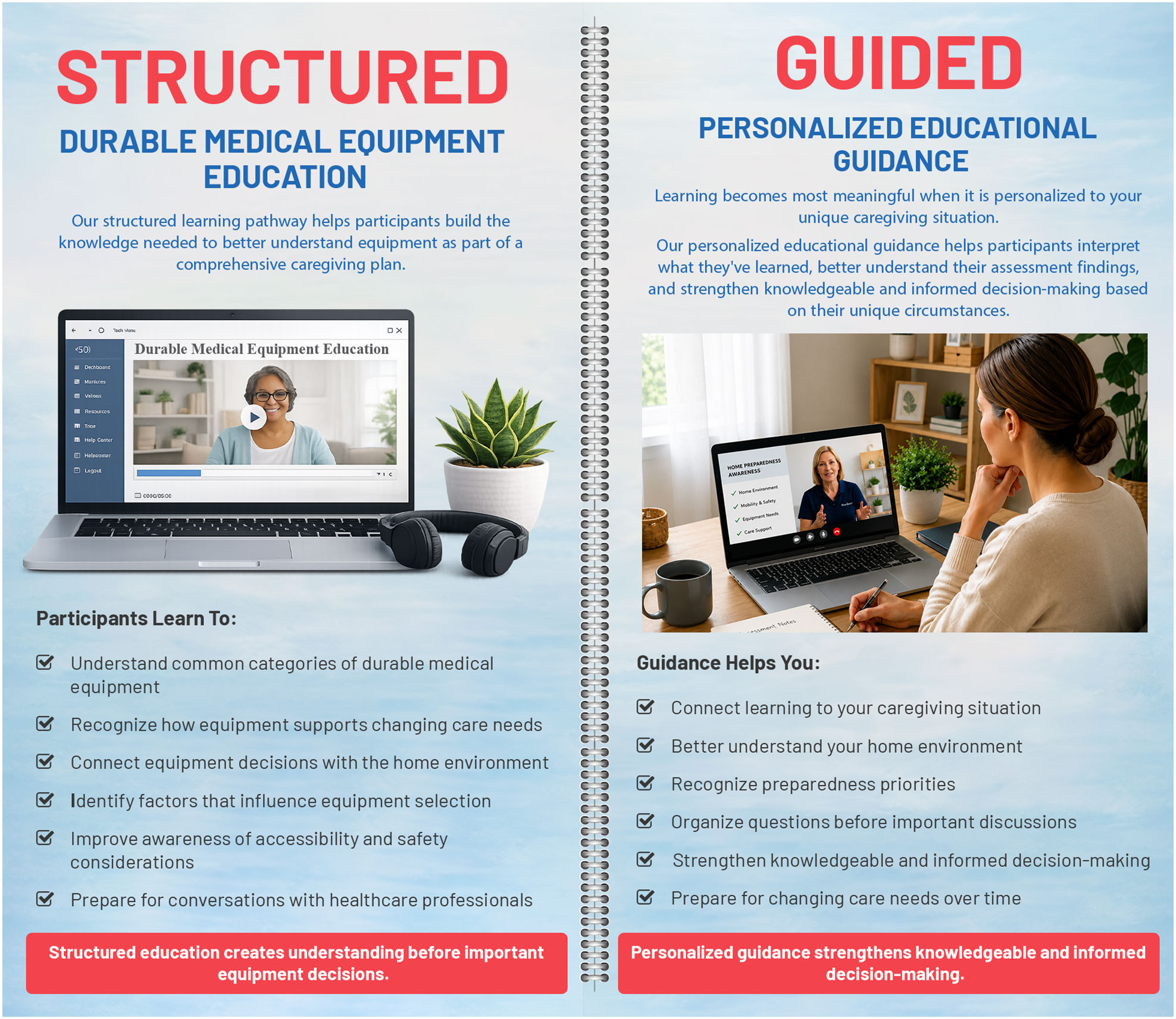
Education builds understanding. Personalized guidance prepares
you for
changing care needs.
Monse-Heart Signature Educational Experience
Personalized Care & Preparedness Assessment
At Monse-Heart, structured learning is only one part of the educational experience.
Every caregiving situation is unique. Our Personalized Care & Preparedness Assessment is the signature educational experience that enables us to better understand each participant’s individual circumstances before providing personalized educational guidance.
By taking the time to understand the individual receiving care, the family or caregivers involved, the care environment, accessibility considerations, caregiving routines, equipment awareness, and planning priorities, we are able to provide educational guidance that reflects each participant’s unique situation and supports knowledgeable and informed decision-making.
Assessment Options:
- Virtual Assessment — Available Nationwide
- In-Home Assessment — Available Throughout Northern Virginia
To Better Understand Your Unique Situation, the Assessment May Explore:
- Your caregiving situation and current care needs
- The care environment and accessibility
- Daily caregiving routines and responsibilities
- Equipment awareness and potential needs
- Family involvement and available support
- Planning priorities and future considerations
Educational Outcome:
The insights gained through the assessment become the foundation for personalized educational guidance, helping participants move forward with greater clarity, confidence, and the ability to make knowledgeable and informed decisions.
Educational Disclaimer
Monse-Heart Education provides educational programs designed to increase understanding of durable medical equipment, caregiving, and home preparedness.
We do not prescribe, recommend, sell, or endorse specific medical equipment and do not provide clinical, medical, or rehabilitation services. Participants should consult qualified healthcare professionals when making medical or equipment-related decisions.

Begin with the Empowered Care Program
Start your structured learning journey with practical education that empowers informed decisions

Questions About Durable Medical Equipment?
Connect with a Monse-Heart educator to discuss your situation, answer your questions, and help you determine
the most appropriate next step.