
By Mussarat Asad, BScN, MPH
Founder of Monse-Heart Education LLC

Welcome to Monse-Heart Online Institute
At Monse-Heart Online Institute, we help learners boost their global careers through language mastery. Whether you are a healthcare professional, an exam candidate, or someone building a life in an English-speaking country, our programs are designed to unlock new opportunities.
We specialize in English for healthcare, test preparation, and global communication — all supported by brain-based learning methods that build confidence, improve memory, and develop real-world fluency.
Unlock Global Opportunities with English
In today’s fast-moving, globalized world, English is more than a language — it’s a professional passport. For healthcare providers, educators, and international learners alike, mastering English opens doors to career advancement, collaboration, and global competency.
Monse-Heart Online Institute champions the belief that learning English goes beyond memorizing words. It is a pathway to empowerment, connection, and real-world readiness. That’s why the institute’s motto is clear: “Increase Your Marketability: Learn the Universal English Language.”
Each course is designed with the brain in mind. Grounded in neuroscience and education research, Monse-Heart’s learning approach strengthens memory, reduces performance anxiety, and helps learners communicate naturally and confidently.
From specialized healthcare communication to test preparation and general fluency, the institute serves learners who seek more than textbook English — those who want to think in English, speak with confidence, and thrive globally.
Evidence for English as a Universal Language
English is widely recognized as the global lingua franca, a central medium for international business, science, and diplomacy. More than 1.5 billion people worldwide speak English either as a first or additional language, making it the most widely learned and used language across continents (British Council, n.d.).
It also serves as an official or common language in over 70 countries and functions as a unifying bridge in higher education, aviation, and global media (Eberhard, Simons & Fennig, 2024).
How I Learned English and Why Confidence Isn’t Always About Fluency
From a very young age — around four or five — I was already fluent in English.

My immersion didn’t come from grammar worksheets or vocabulary drills; it came from life itself. At church, I regularly attended children’s Bible study and the Pathfinders Club, where I interacted with missionaries from the United States, the United Kingdom, South Africa, New Zealand, Australia, and Canada. Each had their own accent, idioms, and expressions. Without realizing it, I was developing one of the most valuable skills of all — understanding and adapting to English as a global language.
At home, I didn’t have many playmates because of the big age gap between me and my older brothers. So, I spent my afternoons watching children’s soap operas and old British films. I repeated lines, practiced tone and rhythm, and mimicked intonation. English became part of me. It wasn’t just a language I used — it was how I moved through the world.
By the time I reached nursing school, I believed I was ready to speak English in any context. Until one day, I wasn’t.
Until one day, I wasn’t.
At Monse-Heart, I realized that learners needed more than vocabulary lists or grammar tips. They needed strategies to remain calm and focused in high-stakes situations. That’s why we rely on science-based methods drawn from neuroscience and educational psychology — approaches proven to reduce anxiety, enhance memory, and build real-world confidence.
Research supports this connection between stress and performance. Studies show that language ability often declines under pressure because anxiety interferes with working memory and cognitive processing (Fedorenko, Mineroff, Siegelman, & Blank, 2021; International Journal of Research and Innovation in Social Science, 2021).
Now, when I meet a student who’s afraid to speak, I remember my own Jacquline Moment and remind them:
“You don’t need more English — you need more readiness.”
That’s what Monse-Heart is built for: to help learners think in English, speak with clarity, and perform under pressure — not freeze in it.
Why I Founded Monse-Heart and What Makes Us Different
I founded Monse-Heart Healthcare & Safety Tutoring Institute to address the same challenges I once faced as a learner — the kind of education that relied on memorization but didn’t prepare me to perform when it mattered most.
I learned early that repetition alone doesn’t lead to confidence. True transformation happens when knowledge builds understanding, inspires communication, and opens global doors. That belief became the heart of Monse-Heart’s teaching philosophy.
Today, Monse-Heart teaches English not as a textbook subject but as a global opportunity multiplier. Our programs empower learners to speak confidently, qualify for international exams, and connect across cultures.
Research shows that English proficiency significantly improves access to higher education, international mobility, and career advancement — even among underserved learners (Loyalka, Mistree, Fairlie, & Khanna, 2025).
I created Monse-Heart because I’ve stood where many of our students stand — fluent but anxious, knowledgeable yet unsure. That experience shaped my mission: to build a place where learning English doesn’t just teach words but builds futures.
Designed for Real-Life Communication, Not Just the Classroom
At Monse-Heart, learning English goes far beyond grammar and vocabulary — it is a pathway to confidence, belonging, and meaningful human connection.
Whether the goal is to communicate with patients, succeed on high-stakes exams, or adapt to life in a new country, Monse-Heart’s programs are designed for real-life success. Learners may enroll to improve their English, but they gain much more: the ability to express ideas clearly, connect across cultures, and thrive in diverse environments.
Research shows that language proficiency is a key predictor of sociocultural integration and a sense of belonging for newcomers in English-speaking countries (Nakhaie, 2020).
At Monse-Heart, fluency is not perfection — it’s the ability to perform when it matters most: during interviews, patient interactions, and everyday communication. That is why the institute offers tailored English courses for work, study, migration, and professional licensing — helping learners build a future grounded in confidence and connection.
English for Real-World Communication
Monse-Heart’s programs are designed to make English practical for work, study, and everyday life. Whether learners aim to communicate with patients, succeed in exams, or adapt to new communities, each course focuses on clarity, confidence, and connection. That philosophy is reflected in every Monse-Heart course, from healthcare English to general fluency, where learners gain practical communication skills for every aspect of life.
For healthcare professionals, lessons strengthen real-world communication and cultural awareness, essential for safe and empathetic care (Fatahi, 2019).
Exam candidates build strategy-based fluency that prepares them for high-stakes testing and global opportunities. Immigrants and general learners gain the language and life skills to navigate everyday interactions, from workplaces to classrooms, with confidence and cultural ease.
Exam candidates build strategy-based fluency that prepares them for high-stakes testing and global opportunities. Across every level, Monse-Heart teaches English not as a subject to memorize, but as a skill to live, share, and grow with.
The Real Value of Learning English
English is more than just another language. It is the world’s most widely used second language and one of the most powerful tools for global participation. It is how professionals explain treatments, how migrants navigate new systems, and how students access international classrooms.
At Monse-Heart, English is not taught to impress but to empower. In today’s connected world, marketability is not about knowing more; it is about connecting better. For better or worse, English remains the bridge that connects much of the world.
Increase Your Marketability: Learn the Universal English Language
At Monse-Heart, English is not merely a subject. It is a tool for transformation. It is how a nurse reassures a patient, how an immigrant secures a job, and how a student enters the global classroom. It represents more than communication. It represents connection, confidence, and opportunity.
When learners speak with clarity, they do more than pass exams. They pass milestones. They gain not only fluency but also access to a global community. In today’s world, a person’s voice is their passport, and English is the language that takes them there.
In today’s world, a person’s voice is their passport, and English is the language that takes them there.
Ready to Unlock Your Global Potential?
Take The Next Step Toward Fluency And Opportunity
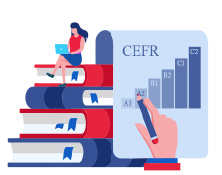
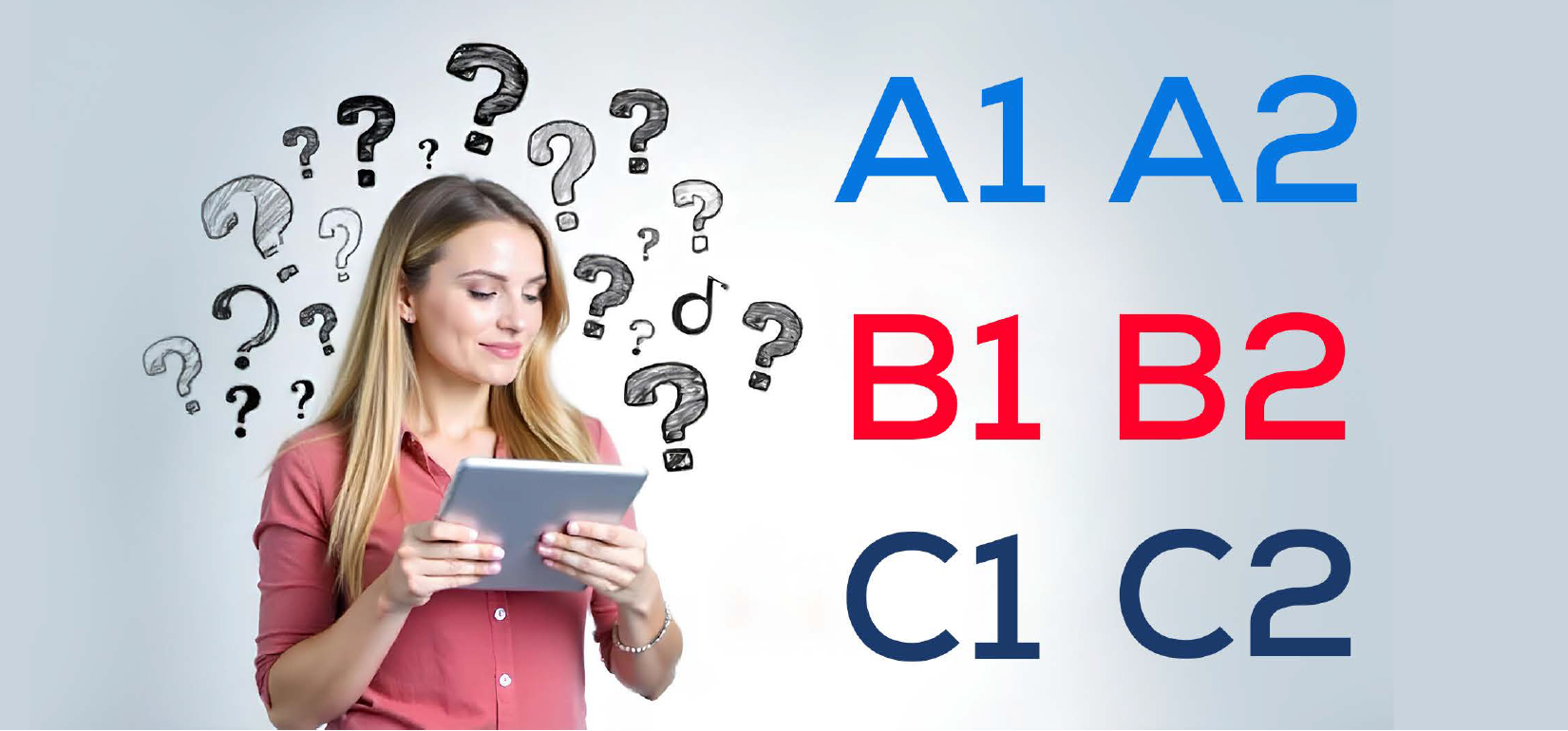
Take our free CEFR English
Level Test
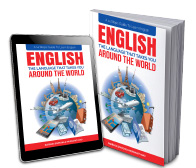
Download our free
eBook
Explore our English
programs
Frequently Asked Questions (FAQs)
English connects people across cultures, professions, and continents. It is the most widely spoken second language globally and dominates fields such as science, education, and international business (Chan, 2018; Runde & Nealer, 2017; Zandt, 2021).
More than 1.5 billion speakers use English as a shared communication tool, making it a true global connector (British Council, n.d.).
Studies show that proficiency in English improves career advancement, international mobility, and leadership potential. Professionals with higher English fluency often gain access to broader job markets and better salaries (Loyalka, Mistree, Fairlie, & Khanna, 2025).
In globalized industries, English remains a core employability skill that signals adaptability and cross-cultural competence.
Language anxiety can affect even advanced learners. Under pressure, stress reduces working memory and disrupts language processing, leading to hesitation or “freezing” moments during communication (Fedorenko, Mineroff, Siegelman, & Blank, 2021; International Journal of Research and Innovation in Social Science, 2021).
That’s why Monse-Heart integrates brain-based learning strategies to strengthen focus and confidence in real-time communication.
Brain-based learning applies insights from neuroscience to enhance how people absorb and use new information. It emphasizes focus, memory retention, and emotional regulation — key factors in language success. Research confirms that using cognitive learning principles improves fluency and long-term retention (Sarkar & Sinha, 2023).
At Monse-Heart, this approach is built into lesson design, helping learners internalize English through real-life practice.
While translation tools have improved, they cannot replicate the nuance, empathy, and cultural awareness of real human communication. Fluency enables professionals to build trust, interpret tone, and adapt to context — all of which are essential in healthcare, education, and leadership.
As linguist Warschauer (2020) notes, AI supports communication, but true connection still depends on human fluency.
References & Sources
- Betancourt, J. R., Green, A. R., Carrillo, J. E., & Ananeh-Firempong, O. (2005). Defining cultural competence: A practical framework for addressing racial/ethnic disparities in health and health care. Public Health Reports, 118(4), 293–302. https://doi.org/10.1016/S0033-3549(04)50106-3
- British Council. (2013). The English Effect: The impact of English, what it’s worth to the UK and why it matters to the world.
- Chan, K. (2018). English as a global language: Challenges and opportunities. Journal of Global Linguistics and Education, 9(1), 21–34. https://files.eric.ed.gov/fulltext/ED591919.pdf
- Council of Europe. (2020). Common European Framework of Reference for Languages: Learning, teaching, assessment (CEFR). https://www.coe.int/en/web/common-european- framework-reference-languages
- Eberhard, D. M., Simons, G. F., & Fennig, C. D. (2024). Ethnologue: Languages of the world (27th ed.). SIL International. https://www.ethnologue.com/
- Fatahi, N. (2019). Language and culture are two potential misunderstanding sources in cross-cultural clinical encounters. Biomedical Journal of Scientific & Technical Research, 23(2), 17202–17204. https://doi.org/10.26717/BJSTR.2019.23.003862
- Fedorenko, E., Mineroff, Z., Siegelman, M., & Blank, I. A. (2021). The impact of anxiety on working memory during language tasks. Journal of Cognitive Neuroscience. SpringerOpen. https://doi.org/10.1186/s41235-021-00287-2
- International Journal of Research and Innovation in Social Science (IJRISS). (2021). Public speaking anxiety: Causes and strategies, 5(6), 313–319. https://www.rsisinternational. org/journals/ijriss/Digital-Library/volume-5-issue-6/313-319.pdf
- Loyalka, P., Mistree, D., Fairlie, R. W., & Khanna, S. (2025). Job training, English language skills, and employability: Evidence from an experiment in urban India. Economic Development and Cultural Change, 73(4), 2131–2156. https://doi.org/10.1086/734458
- Nakhaie, R. (2020). Language proficiency and sociocultural integration of Canadian newcomers. Applied Psycholinguistics, 41(6), 1437–1464. https://doi.org/10.1017/ S0142716420000375
- Runde, D., & Nealer, E. (2017). The link between English proficiency and economic growth. Center for Strategic and International Studies (CSIS). https://www.csis.org/analysis/
link-between-english-proficiency-and-economic-growth - Sarkar, D., & Sinha, S. (2023). Neuroscience in education: The role of brain-based learning in language acquisition. Journal of Cognitive Education and Psychology, 22(3), 145–159. https://doi.org/10.1891/JCEP-D-22-00123
- Warschauer, M. (2020). Artificial intelligence and language learning: Opportunities and limitations. TESOL Quarterly, 54(3), 783–798. https://doi.org/10.1002/tesq.567
- Zandt, F. (2021). Global English speakers report. Statista & British Council. https://www.britishcouncil.org/research-policy-insight/research-reports/english-effect